
Topics: Pest Control
A mouse in the kitchen is more than an unpleasant surprise. Mice can contaminate food, damage insulation and wiring, and leave droppings in places where children and pets spend time. The quickest response is not always the safest one, especially when bait, traps, or contaminated nesting materials are involved. Knowing how to remove mice safely starts with protecting people and pets, then addressing the entry points that allowed the problem to begin.
For homeowners across Indiana and nearby Michigan communities, mice often move indoors when outdoor temperatures drop, but activity can happen any time of year. A few droppings may point to a recent visitor. Repeated droppings, gnaw marks, or scratching in walls usually call for a more complete plan.
Start by Confirming the Signs of Mice
Mice are quiet, but they leave evidence behind. Small, dark droppings are often found under sinks, behind appliances, in pantries, along garage walls, and near stored pet food. You may also notice shredded paper or fabric, greasy rub marks along baseboards, chewed food packaging, or a stale, musky odor.
Fresh droppings are darker and may look slightly moist. Older droppings turn gray and become dry. This distinction can help you understand whether activity is current, but it should not change how you handle the area. Treat all rodent droppings and nesting materials as potentially contaminated.
If you hear movement in an attic, crawl space, or wall after dark, the problem may be larger than a single mouse. Mice reproduce quickly, and a small issue can become an active infestation before it is visible in living areas.
How to Remove Mice Safely: Protect the Area First
Before setting traps or cleaning, keep children and pets out of the affected area whenever possible. Put away food, dishes, pet bowls, and small appliances that may have been exposed. Store pantry items in hard-sided containers with tight-fitting lids, not thin cardboard boxes or bags.
Do not sweep or vacuum dry droppings, urine, or nesting material. That can stir contaminated particles into the air. Instead, ventilate the room by opening doors and windows for about 30 minutes if practical. Wear disposable gloves and, for heavier cleanup or confined spaces, a properly fitted face covering.
Spray droppings and nests thoroughly with a household disinfectant or a fresh bleach solution prepared according to product directions. Let the surface remain wet for several minutes, then use paper towels to pick up the material. Place the waste in a sealed bag, then place that bag inside a second bag before putting it in an outdoor trash container. Disinfect the surrounding surface and wash your hands well after removing gloves.
For extensive droppings in an attic, crawl space, HVAC area, or long-vacant building, professional help is the safer choice. Those spaces may contain more contamination than a homeowner can reasonably clean without the right protective equipment and procedures.
Choose a Trapping Method That Fits the Situation
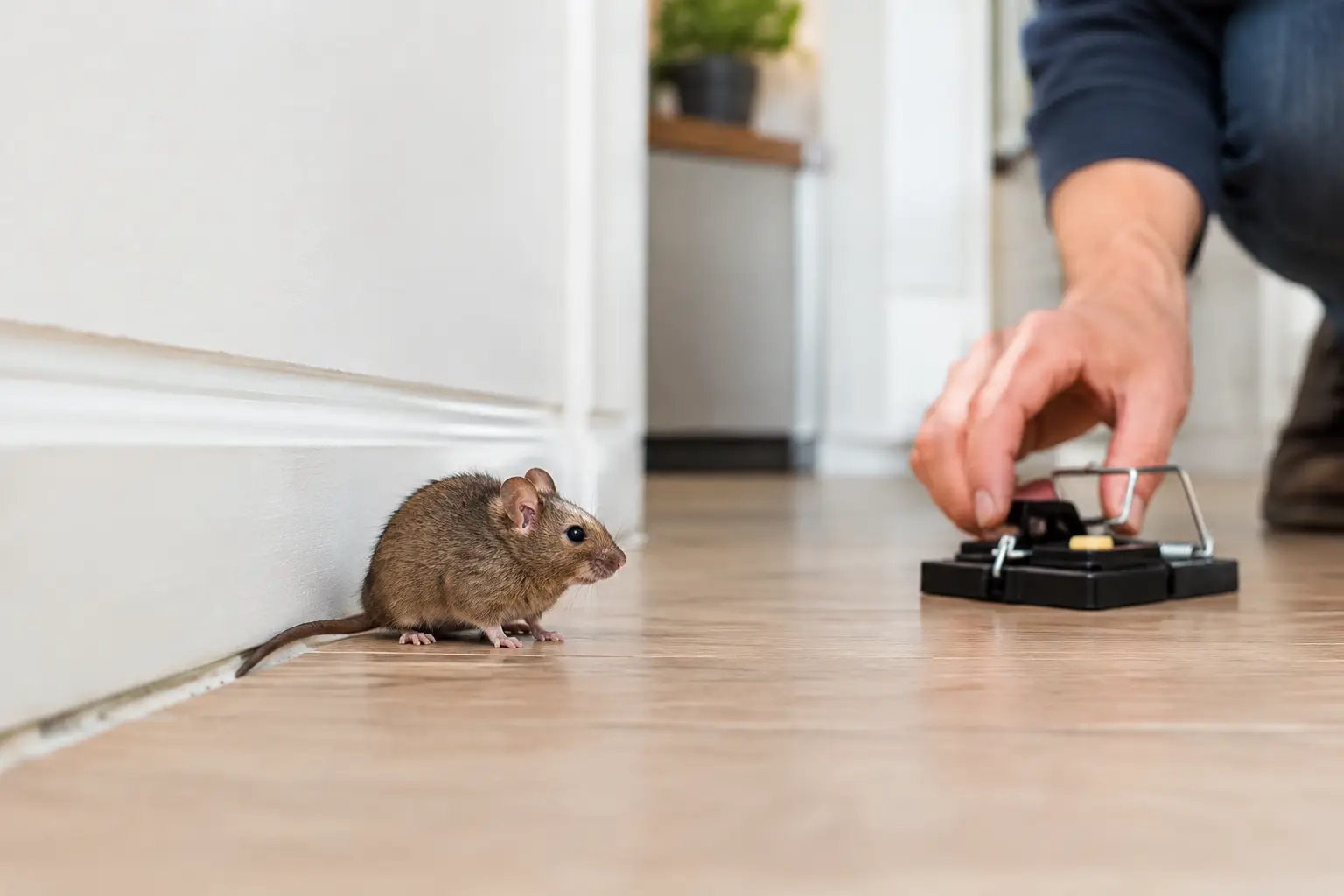
For a small, known mouse problem, enclosed snap traps are often a practical and effective option. They provide a quick kill while reducing the chance that a pet or child can touch the trap. Place traps where mice travel, usually tight against walls with the trigger end facing the wall. Mice tend to follow edges rather than cross open rooms.
Use a small amount of peanut butter, chocolate spread, or another sticky food bait. Too much bait lets a mouse feed without triggering the trap. Check traps every day. A trapped mouse should be removed using gloves, sealed in a bag, and placed in an outdoor trash container. Then disinfect the trap and reset it if activity continues.
Live traps may seem like the most humane choice, but they have trade-offs. A trapped mouse can become stressed or die if the trap is not checked frequently. Releasing mice close to the home often leads to repeat entry, and moving wildlife may be restricted in some locations. If you choose a live trap, check it at least daily and follow local rules for release.
Avoid glue boards in homes whenever possible. They can cause prolonged distress to animals and may accidentally trap pets, birds, or other non-target wildlife.
Use Rodent Bait With Extra Caution
Rodent bait can be useful in certain situations, but it is not the first choice for every home. Loose bait is a risk around children, pets, and wildlife. It can also lead to mice dying inside walls, ceilings, or inaccessible voids, creating odor and cleanup issues.
If bait is needed, it should be secured inside tamper-resistant bait stations and placed only where children and pets cannot access them. Commercial properties, homes with ongoing exterior pressure, and larger infestations may benefit from a professionally managed baiting program because placement, monitoring, and documentation matter.
Never assume that more bait means faster results. Effective rodent control is about strategic placement, monitoring, sanitation, and exclusion. Bait alone does not close the holes mice use to get inside.
Seal Entry Points Before New Mice Move In
A mouse can fit through a gap about the width of a pencil. That makes exclusion one of the most valuable parts of any rodent-control plan. Walk around the exterior of your home and look closely at areas where utility lines, pipes, cables, and air-conditioning lines enter the structure. Check door sweeps, garage door corners, foundation vents, siding gaps, rooflines, and openings around crawl spaces.
Seal small gaps with durable materials such as copper mesh, steel wool used with sealant, or caulk designed for exterior use. Larger openings may require metal flashing, hardware cloth, or repairs to damaged siding and foundation areas. Avoid relying on expanding foam by itself. Mice can chew through it.
Inside, pay close attention to plumbing openings under kitchen and bathroom sinks, gaps behind stoves and refrigerators, and penetrations around laundry hookups. If you can see daylight or feel a draft, a mouse may be able to use that opening.
Remove What Attracts Mice
Mice need food, water, and shelter. Eliminating easy access makes your home less appealing while traps and exclusion do their work. Clean crumbs from counters, floors, toaster trays, and under appliances. Do not leave pet food out overnight, and repair dripping pipes or moisture problems in basements, utility rooms, and crawl spaces.
Outside, keep firewood, stored materials, and dense vegetation away from the foundation when possible. Use containers with tight lids for trash and birdseed. A tidy property will not guarantee that mice stay away, but it removes the cover and food sources that make rodent activity easier to sustain.
Know When a Professional Inspection Makes Sense
A homeowner can often handle one or two mice caught early. However, recurring sightings, droppings in several rooms, attic activity, chewed wiring, or evidence of nesting usually mean the issue needs a trained inspection. The same is true for restaurants, healthcare facilities, apartment properties, warehouses, and other businesses where rodent activity can affect safety, inventory, and operations.
A professional rodent-control plan should do more than place traps. It should identify likely entry points, evaluate activity levels, recommend exclusion repairs, place targeted monitoring or treatment where appropriate, and provide follow-up. At Termishield, that approach is built around Inspect, Treat, Protect, with clear recommendations and accountable service if activity returns.
Mice are persistent, but they are not unbeatable. Act early, clean affected areas carefully, use traps where they can work safely, and close the routes rodents use to enter. If the signs keep coming back, a free inspection can replace guesswork with a plan that helps your home feel protected again.