
Topics: Pest Control
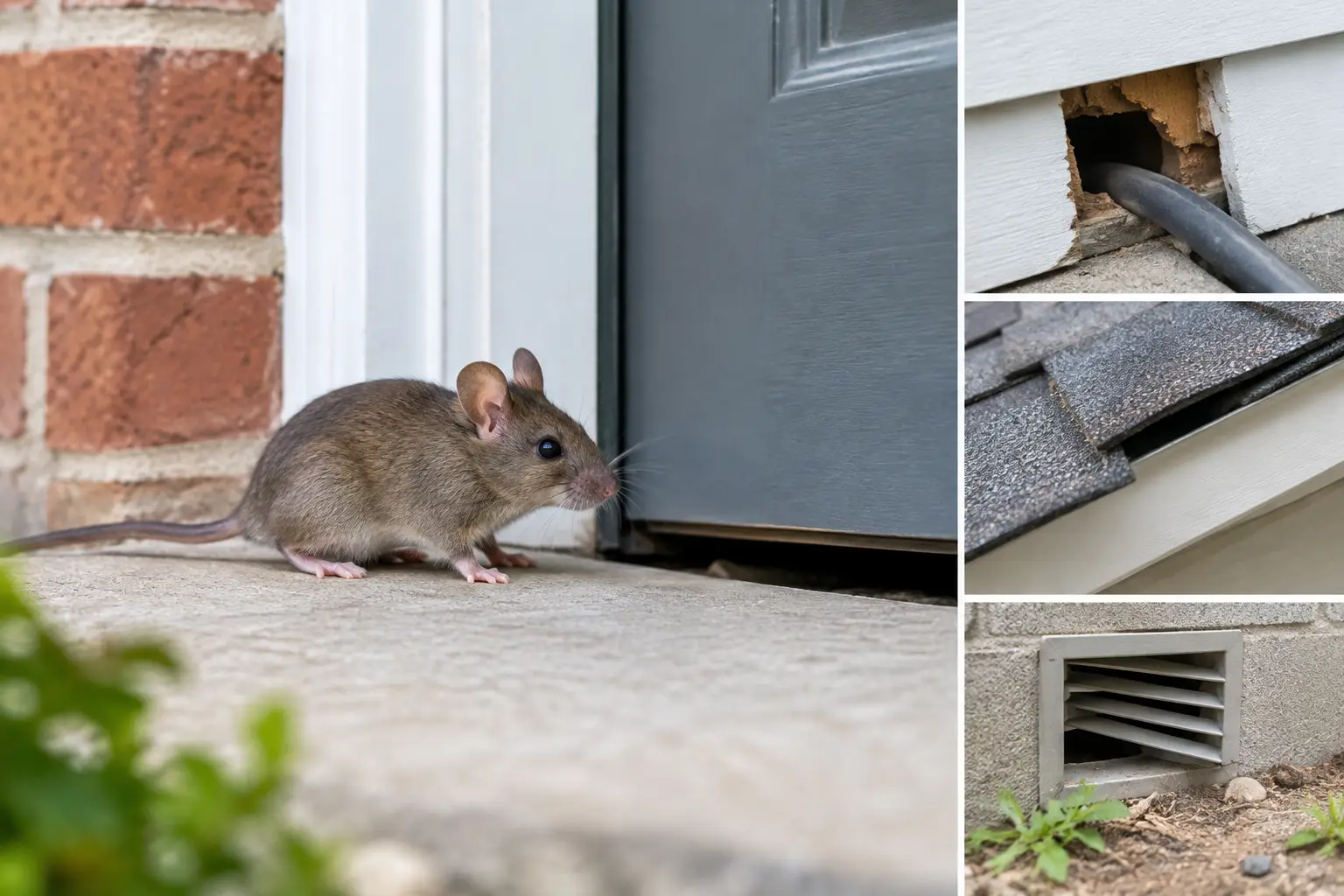
A mouse does not need a wide-open door to get inside. It can squeeze through a gap about the width of a pencil, while rats can use larger openings around pipes, vents, and foundations. Mice and rats look for home rodent entry points when temperatures drop, food is available, or a small exterior defect gives them a protected route indoors.
For homeowners across Indiana and nearby Michigan communities, rodent activity often starts outside long before you hear scratching in a wall or find droppings in a pantry. Finding and sealing access points early can help prevent property damage, contaminated food, and the stress of an active infestation.
Common Mice and Rats Home Rodent Entry Points
Start low and work your way around the home. Rodents usually enter where building materials meet, shift, or leave an opening behind utility equipment. A careful inspection should include the foundation, garage, roofline, and every place a pipe, cable, or vent passes through an exterior wall.
Small cracks in foundations and gaps beneath siding can be enough for mice. Pay close attention to areas behind shrubs, decks, steps, and air-conditioning units, where openings are easy to miss. Basement windows, crawl space vents, and damaged screens are also frequent access points.
Garage doors deserve a close look. Worn weatherstripping and gaps at the bottom corners can let rodents into the garage, where they may nest in stored boxes, insulation, or vehicles before moving into the house. Door sweeps on exterior doors should sit tight against the threshold without leaving daylight underneath.
Utility penetrations are another common problem. Water lines, gas pipes, electrical conduit, cable lines, and dryer vents often have gaps around them. A rodent may chew through weak materials used as a quick patch, so sealing needs to be durable and appropriate for the location.
At the roofline, inspect attic vents, soffits, loose fascia, chimney flashing, and gaps where roof sections meet. Rats are capable climbers, and branches touching or hanging close to the roof can provide an easy path upward. A loose vent cover may look minor from the ground, but it can become a direct route to an attic.
Signs Rodents Have Already Found an Opening
Entry points are not always obvious, but rodent activity leaves clues. Fresh droppings near food storage, along basement walls, or inside cabinets are a strong sign. Grease marks on walls or baseboards can develop where rodents repeatedly travel the same route.
You may also notice shredded paper, fabric, or insulation used for nesting. Scratching sounds after dark, chewed food packaging, gnaw marks on wood or wires, and a musty odor in enclosed spaces all warrant a closer inspection. If the evidence is concentrated in one room, do not assume the opening is nearby. Rodents can travel through wall voids, crawl spaces, and attic areas after entering elsewhere.
Seal Gaps, But Do Not Seal Rodents Inside
Exclusion is one of the best long-term rodent-control steps, but timing matters. Sealing every opening while mice or rats are still active inside can trap them in wall voids or drive them into new areas of the home. A home with confirmed activity may need trapping or other targeted control before final exclusion work begins.
For small gaps, use materials rodents cannot easily chew through, such as metal flashing, hardware cloth, or other professional-grade exclusion materials. Caulk alone may help finish a repair, but it is rarely a reliable solution for a gap rodents can enlarge. Damaged vent covers and screens should be repaired with a rodent-resistant material that still allows proper ventilation.
Outside conditions matter, too. Keep firewood, stored items, and dense vegetation away from the foundation when possible. Clean up fallen birdseed and pet food, secure trash containers, and avoid leaving garage doors open for long periods. These changes do not replace exclusion, but they reduce the food and shelter that make a property more attractive.
When a Professional Rodent Inspection Makes Sense
A homeowner can often spot an obvious gap under a door or a torn screen. The harder part is identifying the full travel route and deciding which repairs should happen first. That is especially true when activity involves an attic, crawl space, attached garage, commercial kitchen, or multi-family property.
A professional inspection helps connect the evidence: where rodents are entering, where they are nesting, and what conditions are supporting the problem. At Termishield, the process is simple: Inspect, Treat, Protect. After identifying active rodent pressure and likely entry routes, a technician can recommend targeted control and practical exclusion steps based on the property, not a one-size-fits-all guess.
If you are seeing droppings, hearing movement, or finding new chew marks, act before a small opening becomes a larger problem. A free inspection can give you a clear next step and help protect the home you work hard to maintain.