
Topics: Pest Control
A single bite can be enough to turn bedtime into a worry. In this bed bug elimination case study, a Northwest Indiana family went from noticing unexplained marks to following a clear, professional plan for getting their home and routine back. The details have been adjusted for privacy, but the process reflects the careful work bed bug problems require.
This was not a situation where a quick spray or a new mattress could solve the issue. Bed bugs hide in seams, cracks, upholstered furniture, baseboards, and other tight spaces near where people rest. Effective elimination depends on finding the activity, preparing the home correctly, treating the right areas, and returning to verify progress.
The Call: Bites, Lost Sleep, and Uncertainty
The homeowners called after several weeks of waking with small, itchy bite marks. At first, they suspected mosquitoes or a skin irritation. Then they found a small reddish-brown insect near the bed frame and began checking online photos. The uncertainty was stressful, especially with children sleeping in nearby rooms.
They had already tried washing bedding, vacuuming the mattress, and using a store-bought product. Those steps were understandable, but they did not address every possible hiding place. More importantly, moving items from room to room could have spread the issue farther through the house.
The family needed answers without pressure or guesswork. The first step was a professional inspection to confirm what they were dealing with and determine how far activity had spread.
Inspect: Confirming Where Bed Bugs Were Hiding
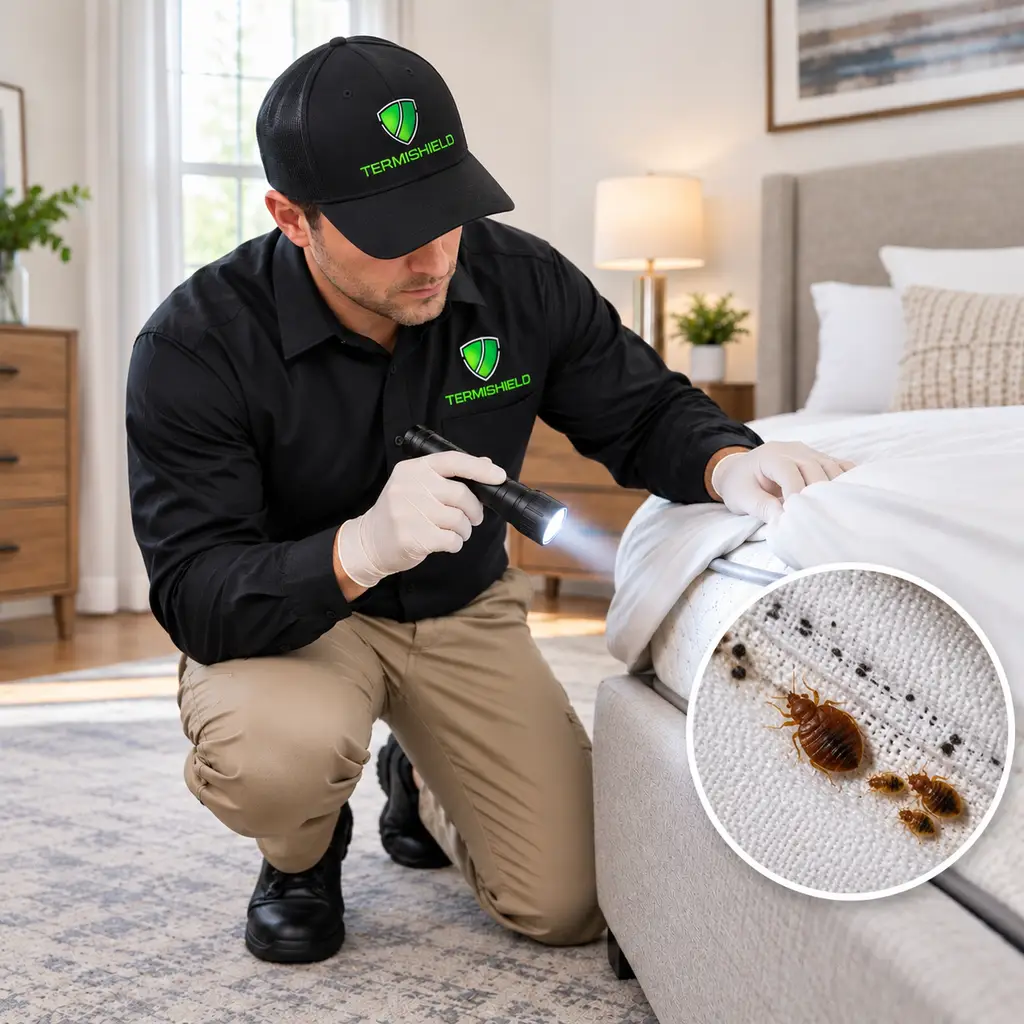
The inspection focused first on the bedroom where bites had been reported. A trained technician checked the mattress piping, box spring, headboard, bed frame joints, bedside furniture, baseboards, wall hangings, and nearby upholstered seating. Evidence included live bed bugs, small dark spotting, and shed skins in gaps around the bed frame and nightstand.
The technician also inspected adjacent bedrooms and common areas. This matters because bed bugs do not always stay in one place, particularly when people begin sleeping in a different room after noticing bites. In this case, activity was concentrated in the primary bedroom, with no confirmed evidence in the children’s rooms or living room.
That finding shaped the treatment plan. A contained issue can often be handled more efficiently than a whole-home infestation, but only if the inspection is thorough. Treating too narrowly can leave active bed bugs behind. Treating every room without evidence can add unnecessary cost and disruption. The right approach depends on the inspection, not assumptions.
The homeowners received honest pricing and clear preparation instructions before treatment was scheduled. They knew what would happen, what they needed to do, and why follow-up mattered.
Prepare: Making Treatment More Effective
Preparation is one of the biggest factors in a successful bed bug service. The family was asked to bag and launder bedding, clothing, and washable fabrics from the affected room according to the technician’s instructions. Clean items were kept sealed until after treatment so they would not be re-exposed.
They also reduced clutter near the bed, emptied nightstands, and made furniture accessible. Vacuuming helped remove some visible debris and insects, but vacuuming alone is not a complete treatment. The vacuum contents were sealed and discarded outside promptly.
The family did not move belongings into other rooms or take potentially affected furniture to the curb. Both actions can create a larger problem. Bed bugs can travel on blankets, clothing, bags, and furniture, then establish themselves somewhere new.
Preparation can feel inconvenient when a family is already exhausted. Still, it gives treatment access to the places bed bugs actually hide. A technician can provide guidance based on the home, the level of activity, and the selected treatment method.
Treat: Targeted Work Where Bed Bugs Live
On treatment day, the technician performed a detailed service focused on bed bug harborages rather than simply applying material across open floor space. The treatment addressed the bed frame, mattress and box spring areas as appropriate, nearby furniture, cracks and crevices, baseboards, and other locations where evidence was found.
Professional bed bug treatment is designed to reach areas that are easy to miss during a do-it-yourself attempt. Depending on the property and treatment plan, the work may include carefully selected professional-grade products, mechanical removal steps, monitoring, and recommendations for encasements or interceptors. The goal is not just to kill visible insects. It is to interrupt the infestation where bed bugs feed, hide, and reproduce.
The homeowners were given re-entry instructions and reminders to avoid deep-cleaning treated cracks and crevices too soon. They were also asked to continue watching for signs of activity without moving to another bedroom. Keeping sleeping locations consistent helps avoid drawing bed bugs into new areas while the treatment plan is working.
Termishield approaches specialty pest problems with the same practical sequence used across its services: Inspect, Treat, Protect. With bed bugs, each part of that process matters. Skipping follow-up is where many otherwise promising treatments lose ground.
Follow-Up: The Step That Protected the Result
A follow-up visit was scheduled to inspect the treated area, review any sightings, and address remaining activity if needed. By that visit, the homeowners reported no new bites for several days and no live insects found on the bed. The technician still inspected carefully rather than treating the lack of reports as final proof.
A small amount of evidence was found in one previously identified bed-frame joint. That did not mean the first service had failed. Bed bug eggs can hatch after an initial visit, and some insects may remain concealed until they emerge. This is exactly why follow-up is part of responsible elimination work.
The technician treated the remaining harborages, reviewed the family’s laundry and storage practices, and confirmed that surrounding rooms still showed no signs of spread. Monitoring devices were left in place to help the homeowners identify any future activity quickly.
At the final check, there were no new bites, no live bed bugs, and no fresh evidence in the inspected areas. The family could return to normal routines with a plan for staying alert, not anxious.
What This Bed Bug Elimination Case Study Teaches
Bed bugs are not a reflection of cleanliness. They can arrive through travel, overnight guests, used furniture, shared laundry spaces, apartments, or everyday belongings. Anyone can encounter them, and early action usually makes the process simpler.
The case also shows why one-time, do-it-yourself efforts can be unreliable. A product may kill the insects it contacts while missing hidden bugs and eggs. Foggers can be especially frustrating because they may not reach tight harborages and can cause bed bugs to scatter into new areas. Throwing out a mattress may feel decisive, but it does not eliminate bed bugs hiding in the frame, furniture, or walls.
A professional inspection gives homeowners a starting point based on evidence. Targeted treatment addresses the places bed bugs use. Follow-up confirms whether the plan worked and catches remaining activity before it becomes another full infestation.
When to Request a Bed Bug Inspection
Request an inspection if you find a bug near a sleeping area, notice unexplained bites that recur after sleeping, see dark spotting on mattress seams or furniture, or discover shed skins in bed-frame joints. Photos can be helpful, but do not rely on a photo alone to identify the pest.
Until the inspection, avoid moving bedding, furniture, or clothing into other rooms. Keep any suspected specimen in a sealed bag or container if you can do so safely. Continue sleeping in the usual room unless a pest professional advises otherwise, and avoid using foggers or random chemicals that may make inspection and treatment harder.
A bed bug problem is stressful because it affects the place your family should rest. The most helpful next move is not panic or guesswork. It is a careful inspection and a treatment plan that gives you a clear path back to a Bug Free Day.