
Topics: Pest Control
A flea problem can feel personal fast. You sit on the couch, walk across a rug, or pick up your dog and suddenly notice itchy bites around your ankles. Effective indoor flea removal is not about chasing the one adult flea you can see. It is about breaking the life cycle hiding in carpet fibers, pet bedding, furniture cracks, and the quiet corners of your home.
The good news is that fleas can be controlled with a deliberate plan. The less helpful news is that one quick spray rarely finishes the job. Fleas develop in stages, and the eggs and pupae already inside your home can lead to new activity after adult fleas are treated. A successful approach combines pet care, thorough cleaning, targeted treatment, and follow-up.
Why Fleas Keep Coming Back Indoors
Adult fleas are only part of the problem. After feeding, female fleas can lay eggs that fall from pets onto bedding, rugs, upholstered furniture, and floor edges. Those eggs become larvae, then pupae protected inside small cocoons. Pupae can remain sheltered until vibration, warmth, or nearby activity signals that a potential host is present.
That is why homeowners sometimes believe a treatment failed when they see fleas a week or two later. In many cases, the treatment killed the exposed adults, while new adults emerged from cocoons that were already present. Timing matters. Follow-up service and persistent cleaning give emerging fleas fewer chances to feed and reproduce.
Pets are usually the source, but not always. Fleas can arrive on visiting animals, stray cats near a crawl space, wildlife around the structure, or even rodents. Treating the indoor symptoms without addressing the source can turn a frustrating week into a recurring problem.
Indoor Flea Removal Starts With the Source
If there is a dog or cat in the home, talk with your veterinarian about reliable flea control before or at the same time you address the house. A home treatment cannot provide lasting relief if untreated pets continue carrying fleas from room to room. Use products specifically approved for your pet’s species, age, size, and health condition. Never assume a dog product is safe for a cat.
If you do not have pets, or if pets are protected and fleas continue appearing, an inspection becomes especially valuable. A pest professional can look for likely entry points and contributing conditions, including animal activity around the home, rodent concerns, wildlife access, and areas where fleas may be developing indoors.
For multi-family homes, apartments, and rental properties, communication matters too. Fleas can travel with pets, belongings, and people between units. Property managers should document reports, inspect affected spaces, and coordinate treatment expectations so one untreated unit does not undermine the rest of the work.
Clean First, Then Treat Strategically
Cleaning does not replace professional treatment during a significant infestation, but it makes treatment work better. Vacuuming removes adult fleas, eggs, larvae, and the debris flea larvae feed on. It also disturbs pupae, encouraging emerging fleas to contact treated surfaces sooner.
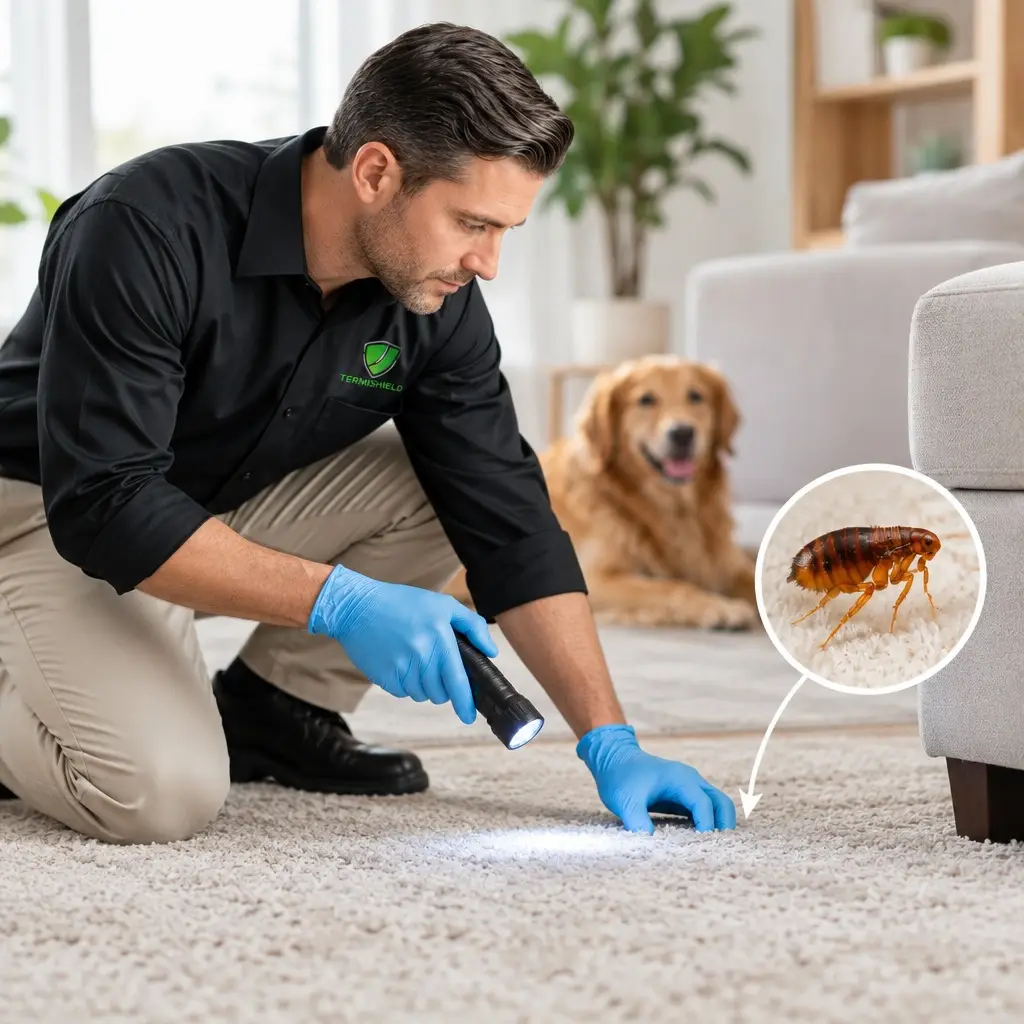
Focus on the places where pets sleep, rest, or spend time. Vacuum rugs, carpeting, upholstered furniture, cushions, beneath furniture, closets, along baseboards, and cracks at the edges of floors. Empty the vacuum canister outdoors right away, or seal and discard the bag in an outdoor trash container.
Wash pet bedding, throw blankets, and washable covers using the warmest settings the fabric label allows. Clean pet carriers and the vehicle if your pet regularly rides in it. Do not overlook a favorite chair or the corner of a basement where a pet naps during the day.
Before a scheduled flea treatment, most homes benefit from a few straightforward preparation steps:
- Vacuum carpets, rugs, upholstered furniture, and floor edges thoroughly.
- Wash pet bedding, blankets, and removable furniture covers.
- Clear belongings from floors and provide access beneath beds and furniture when possible.
- Arrange for people and pets to be out of treatment areas as directed by your pest professional.
Your technician will provide specific instructions based on the products and treatment plan being used. Follow those directions carefully, especially re-entry times and any recommendations for post-treatment vacuuming.
What Professional Indoor Flea Removal Looks Like
A professional service should begin with inspection, not guesswork. Flea bites can resemble bites from bed bugs, mosquitoes, mites, or other pests. A trained technician evaluates where activity is occurring, whether pets are involved, and which rooms need attention.
Treatment is then targeted to flea harborages rather than applied blindly throughout the house. Depending on the situation, a professional may use products designed to control adult fleas along with insect growth regulators that interrupt development. This two-part approach addresses the fleas you see and helps prevent immature fleas from becoming the next wave of biting adults.
The final step is protection through follow-up. Because pupae may emerge after the initial service, some flea problems require a return visit. That is not a sign that you did anything wrong. It is a practical response to the flea life cycle. Honest pest control means setting that expectation before treatment begins, not after.
Termishield Termite and Pest Control follows a simple process: Inspect, Treat, Protect. For flea concerns, that means identifying where the problem began, treating active indoor areas with professional-grade methods, and giving homeowners a clear plan for pet coordination, cleaning, and follow-up. If pests return between covered service visits, so do we.
How Long Does It Take to Get Rid of Indoor Fleas?
It depends on the size of the infestation, how long fleas have been established, whether all pets are protected, and how much of the home is affected. Some homeowners see a major reduction quickly after treatment. Others may notice occasional newly emerged fleas over the following days or weeks.
The key is to look for the overall trend. Bite activity should decline, flea sightings should become less frequent, and pets should stop bringing fresh fleas into the home. Continue vacuuming as recommended after treatment because it helps expose emerging fleas to treated areas. Do not add over-the-counter sprays on top of a professional treatment unless your technician says it is appropriate. Mixing products can create safety concerns and may interfere with the plan.
Avoid These Common Flea-Control Mistakes
Foggers and total-release aerosols are tempting because they sound comprehensive, but they often do not reach the protected spaces where flea stages develop. They can also leave residue on unnecessary surfaces while missing areas under furniture, inside upholstery seams, and along floor edges.
Another common mistake is treating only the living room because that is where bites are noticed. Fleas may be developing in bedrooms, pet resting areas, hallways, basements, and vehicles. Treat the actual pattern of activity, not just the most irritating spot.
Finally, do not stop once the first few fleas disappear. Keeping pets on veterinarian-recommended flea prevention and maintaining regular vacuuming during the follow-up period are what help prevent a short-term improvement from becoming a repeat infestation.
When to Schedule a Flea Inspection
Call for help when bites continue after pet treatment and cleaning, when fleas are visible in more than one room, or when you are unsure whether fleas are truly the cause. An inspection is also wise if you have young children, sensitive pets, a heavy infestation, or a possible wildlife or rodent issue contributing to the problem.
A flea-free home is not built on one product or one afternoon of cleaning. It comes from a clear plan, careful follow-through, and support that does not leave you guessing. Start with the source, treat the spaces fleas use, and give the life cycle enough time to end. That is how you get back to a more comfortable, Bug Free Day.